


Chief of Staff Placement
for Discerning Principals
What Is a Chief of Staff?
At a certain level of life, the principal’s time and attention become the most valuable resources in their household. The demands on both from business, family, properties, advisors, and staff grow faster than any single support role can absorb. A chief of staff is the person who manages that complexity so the principal does not have to.
A chief of staff operates at the intersection of the principal’s professional and personal life, but at a strategic rather than administrative level. Where an executive assistant manages tasks and schedules, a chief of staff manages priorities, decisions, and the people and systems around them. They do not just execute what the principal asks. They anticipate what the principal needs and handle it before it becomes a demand on the principal’s attention.
My Household Managed places chiefs of staff for UHNW and HNW principals, family offices, and private households in Chicago and South Florida, and with select clients nationwide.
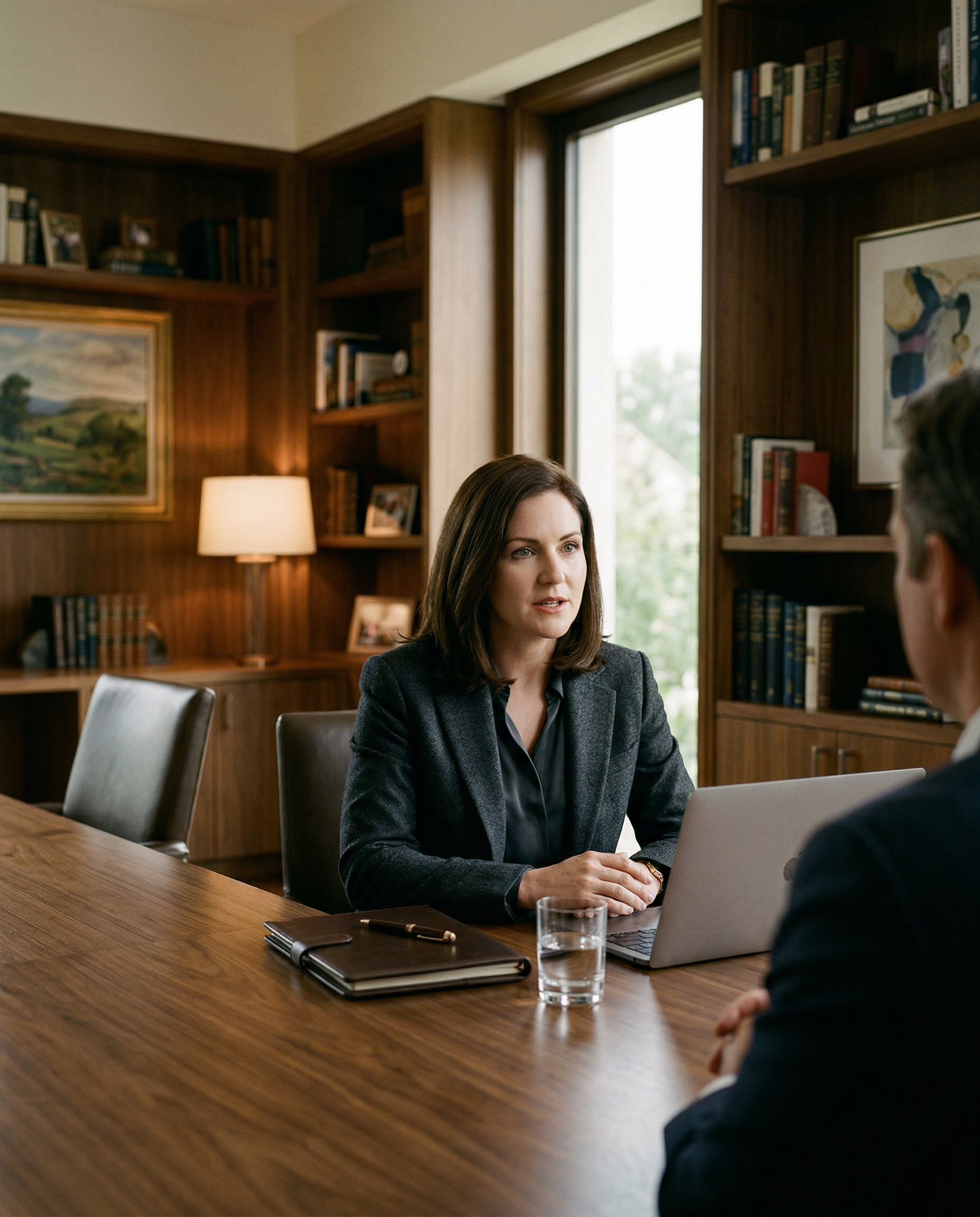
Chief of Staff, Executive Assistant, Estate Manager: What Is the Difference?
These roles are frequently confused because they often report to the same principal and share some functional territory. The distinction is level of authority, scope of thinking, and whether the role is managing tasks or managing strategy.
An executive assistant manages the principal’s calendar, correspondence, travel, and day-to-day logistics with precision and discretion. The role requires exceptional organization and the ability to anticipate the principal’s preferences. The executive assistant is focused on the principal’s time and outputs. They do what the principal directs, and they do it at a high level.
A chief of staff operates one level above. They manage the flow of information, decisions, and people around the principal rather than managing the principal’s schedule directly. They can speak on behalf of the principal, represent the principal’s priorities to advisors and staff, and make decisions within a defined scope without needing to surface everything upward. The role requires business judgment, not just organizational skill.
An estate manager owns the operational infrastructure of the household, the staff, vendors, properties, and systems. Where a chief of staff is focused on the principal’s enterprise and priorities, an estate manager is focused on the environments the principal lives in. In complex households, both roles exist and report to the principal separately. The chief of staff manages the principal’s world. The estate manager manages the physical one.
Chief of Staff Responsibilities
A chief of staff job description varies significantly by principal. The role is custom-shaped around the person it serves. Responsibilities typically include:
- Managing the flow of information, decisions, and requests to and from the principal
- Representing the principal’s priorities to household staff, advisors, and business teams
- Strategic project oversight and cross-functional coordination
- Preparing the principal for meetings, calls, and engagements
- Managing relationships with the family office, wealth managers, attorneys, and financial advisors
- Overseeing estate managers and household staff
- Travel planning and logistics at an executive level
- Acting as a trusted sounding board and advisor to the principal
- Identifying operational gaps and implementing systems to address them
- Managing confidential correspondence and sensitive communications
- Liaising between the principal’s personal life, business life, and philanthropic commitments
In households and family offices where the principal’s time is a strategic resource, a chief of staff functions as an extension of the principal’s judgment and decision-making, not a manager of their to-do list.

The Chief of Staff in a Family Office
A family office exists to manage the full complexity of a principal’s financial, legal, philanthropic, and household life. It typically includes wealth managers, attorneys, accountants, trustees, and a range of advisors, all of whom have direct lines of communication to the principal. Without someone coordinating that ecosystem, the principal becomes the connective tissue between every advisor and every initiative. That is where a chief of staff becomes essential.
In a family office context, the chief of staff acts as the operational hub between the principal and the advisors around them. They route information to the right people, ensure decisions are made at the right level rather than escalated unnecessarily, manage the principal’s engagement with the office calendar, and maintain the strategic priorities the principal has set across financial, personal, and philanthropic domains.
Many family office chiefs of staff also oversee the household side of the principal’s life, managing the estate manager or house manager and ensuring that the personal household operates in alignment with the family’s broader priorities. In single-family offices and multi-family offices alike, the chief of staff is increasingly recognized as the role that determines how effectively the principal can actually use the infrastructure around them.

Common Questions About the Chief of Staff Role
If you don’t see what you’re looking for, the Discovery Call is the right place to start.